

 Save $60.00

Professional Clean, Beyond the Countertop

Live Freely
Professional care that moves with your life.


 Save $60.00
 Save $57.00

Professional Clean. Your Way.
Compare key features and find the COSLUS water flosser that fits your routine.
Swipe horizontally to compare all products.


Over
10,000,000+


Oral Care Guide

Celebrate Halloween with COSLUS and enjoy 10% off the E40 Cordless Water Flosser, plus free shipping. No discount code is required—the discount is automatically applied at checkout through October 31.

Every October, dentists across America brace themselves. Americans buy nearly 600 million pounds of candy each year, and Halloween is the Super Bowl of sugar (Midtown Dental Group). Fun fact: the ADA once asked dentists what they hand out to trick-or-treaters, and 76% admitted they hand out candy themselves (CV Pediatric Dental). Even dentists can't resist. But not all candy is equally evil. Here's the official countdown, from "dentists tolerate it" to "dentists want it banned." #5 🍫 Chocolate bars with sticky fillings Plain chocolate is actually the dentist's pick of the litter — the ADA says "a little chocolate is fine" because it doesn't stick to teeth as badly as other sweets (CU School of Dental Medicine). The problem starts when manufacturers stuff it with caramel, nougat, or toffee. Those fillings turn an innocent chocolate bar into a sticky trap that wedges into molar grooves. Rule of thumb: the plainer the chocolate, the happier your dentist. Dark chocolate gets bonus points for lower sugar. Dentist hate meter 40% — Mildly annoyed #4 🍭 Hard candy Jolly Ranchers, jawbreakers, lollipops — two problems here. First, the obvious: bite down wrong and you can crack or chip a tooth, or wreck a filling or crown (CU School of Dental Medicine). Second, the sneaky one: hard candy sits in your mouth forever, bathing your teeth in sugar the entire time. As cosmetic dentist Dr. Kevin Sands puts it, "their prolonged presence in your mouth provides bacteria with a long sugar feast," which can potentially lead to cavities (Dr. Kevin Sands). Dr. Joel Berg of the University of Washington's School of Dentistry adds that how long candy stays in your mouth matters, not just how much you eat (UW News). Dentist hate meter 55% — Visibly concerned #3 🧲 Sticky & chewy candy Taffy, caramels, Tootsie Rolls, Starburst — these top many dentists' worst lists outright. "Sticky or gummy candy should be avoided. They tend to get stuck on teeth and may even stay there after brushing," leaving sugar sitting on enamel and raising decay risk (CU School of Dental Medicine). Dr. Sands warns their sticky nature means "they often get lodged in the nooks and crannies of the teeth, making them difficult to remove even after brushing" (Dr. Kevin Sands). They can even potentially loosen braces and fillings (ADA News). If it takes effort to unstick from your teeth, it's doing damage the whole time. Dentist hate meter 70% — Strongly disapproves #2 🐻 Gummy candy Gummy bears, worms, fruit snacks — they look innocent. They are not. These concentrated sugar shapes "cling stubbornly to every tooth surface" and "mold into dental grooves and resist natural saliva cleansing" (Roberson Dental). Parents often don't realize how bad they are because they seem lighter than a caramel — but dentists rank them among the worst offenders for exactly that reason. Dentist hate meter 85% — Deeply offended #1 💀 Sour gummies Sour Patch Kids, Warheads, sour worms — the undisputed champion of dental destruction. The perfect storm: sticky enough to glue themselves to your teeth, plus a concentrated acid coating that attacks enamel on contact. The ADA warns: "Sour candies are high in dietary acids that attack the hard, protective coating on your teeth (enamel). They're tasty, but they're some of the worst offenders when it comes to tooth decay" (CU School of Dental Medicine). Dr. Sands notes many sour candies "have a pH level dangerously close to battery acid," and continual exposure breaks enamel down (Dr. Kevin Sands). As one dental practice puts it, sour gummies are "the perfect storm of dental damage," uniting sticky consistency with enamel-eroding acidity (Roberson Dental). Dentist hate meter 100% — Maximum hatred achieved 🧛 The dentist-approved Halloween survival plan Eat candy with meals, not as all-day snacks. Saliva production increases during meals and helps neutralize acids. Rinse with water right after. It washes away sugars and acids sitting on your teeth (ADA News). Wait ~30 minutes before brushing. Acidic foods temporarily soften enamel, and brushing immediately can cause additional wear — rinse first, then brush once the enamel has had time to reharden. Floss like you mean it. Sticky and gummy residue hides between teeth where brushes can't reach. A water flosser blasts it out of every groove — which is exactly what those #1-ranked sour gummies are counting on you not doing. 🎃 Trick or Treat Your Smile This Halloween, give your teeth the treat they deserve. EXTRA 10% OFF + Free Shipping on the COSLUS E40 Water Flosser Claim Your Treat ✓ ADA Accepted — verified on the official ADA Seal record · 10-level pressure control Sources & references American Dental Association — Sifting through Halloween candy to keep cavities at bay American Dental Association — Keeping teeth healthy during Halloween ADA Seal of Acceptance — COSLUS Oral Irrigator product record CU School of Dental Medicine — Halloween Candy Tips for Your Teeth University of Washington School of Dentistry — Beware! Halloween tooth decay is lurking Dr. Kevin Sands — These Halloween candies are the worst for your teeth Roberson Dental — Smart Parent's Halloween Candy Survival Guide Midtown Dental Group — Best and Worst Candy For Your Teeth CV Pediatric Dental — Best and worst candies for your child's teeth This article is for fun and general information — it's an editorial ranking, not dental advice. For personal guidance, ask your dentist (preferably after Halloween).

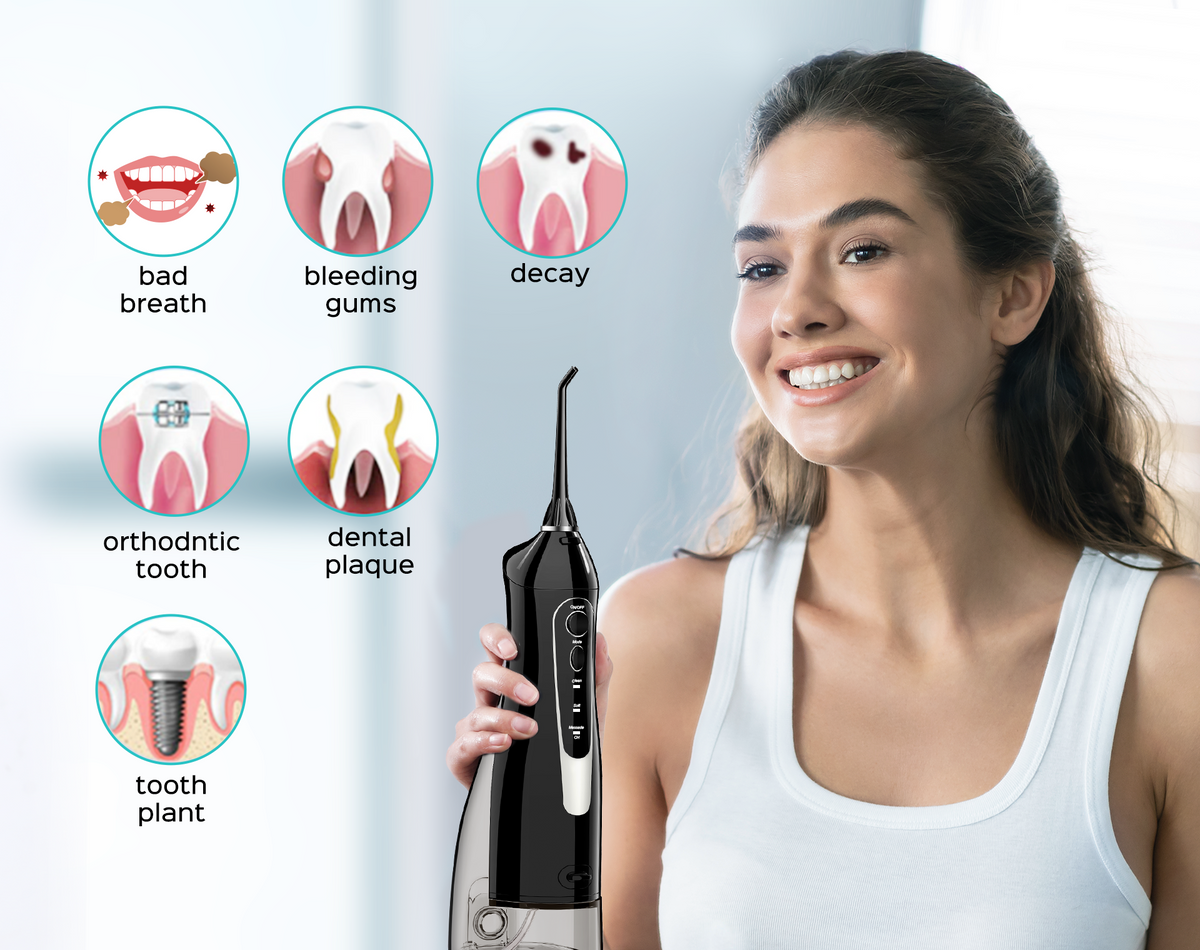
Yes, a water flosser may help with bad breath when the odor is related to trapped food, plaque, or gum inflammation around and between the teeth. That does not mean a water flosser “treats bad breath.” Its job is much simpler: clean areas a toothbrush can easily miss. If the smell keeps coming back even when your teeth, gums, and tongue are being cleaned well, the cause may be somewhere else and is worth checking rather than just flossing harder. Bad Breath Can Start Between Your Teeth Food does not always disappear just because you brushed. Small pieces can stay between teeth, around braces, or near dental work. Plaque can also build up along the gumline and between teeth if those areas are not cleaned regularly. Both matter because oral bacteria can break down food debris and other material in the mouth, producing compounds associated with unpleasant breath. This is where a water flosser can be useful. Instead of trying to cover up the smell, it helps flush debris from between teeth and clean along the gumline as part of your normal oral-care routine. If you are using a model such as the COSLUS E40, guide the stream along the gumline and pause briefly between teeth. Use a pressure level that feels comfortable; stronger pressure is not the goal. Your Gums May Be Part of the Problem Too Persistent bad breath sometimes appears together with gum inflammation. When plaque stays around the teeth, gums can become red, swollen, tender, and more likely to bleed. Persistent bad breath can also be one of the possible signs of periodontal disease. So if your bad breath also comes with bleeding or swollen gums, simply masking the smell with gum or mouthwash misses the bigger issue. Consistent brushing and interdental cleaning matter, but persistent gum symptoms deserve a dental checkup. A water flosser can help with daily plaque control. It cannot tell you whether you have gingivitis or periodontitis. Don’t Clean Between Your Teeth and Ignore Your Tongue Sometimes people focus so much on flossing that they forget another common source of odor: the tongue. The tongue can trap bacteria and debris, particularly toward the back. So if fresher breath is the goal, your routine should not stop at the gumline. The COSLUS E40 includes a Tongue Scraper Tip, which can be used gently over the tongue surface. A regular tongue scraper or toothbrush can also work; you do not need a special attachment just to clean your tongue. The point is to clean the area, not to buy another accessory. What If You’re Cleaning Well but Your Breath Still Smells? That is when the question changes. Bad breath is not always caused by something stuck between your teeth. Dry mouth can contribute because saliva normally helps clear particles from the mouth. Smoking, certain medications, tooth decay, oral infections, problems involving the nose or throat, and some medical conditions can also be involved. So if you are already brushing thoroughly, cleaning between your teeth, and cleaning your tongue, and the odor still keeps returning, increasing your water-flosser pressure probably is not the answer. This is especially true if the change in your breath is persistent rather than something obvious, such as garlic after lunch or morning breath. When Is It Worth Seeing a Dentist? See a dentist if bad breath keeps coming back despite good daily cleaning, particularly if you also notice: Bleeding or swollen gums Gum recession Tooth pain or sensitivity Loose teeth A persistent bad taste Problems around a crown, implant, filling, or other dental work A dentist can look for plaque and tartar buildup, gum disease, decay, dry mouth, or other oral causes. If the mouth does not appear to be the source, further medical evaluation may be appropriate. That is more useful than endlessly adding products to your routine without knowing what is causing the smell. Bottom Line A water flosser can help with bad breath when better cleaning between the teeth and along the gumline addresses part of the cause. Use it for what it is good at: removing trapped debris and supporting daily interdental cleaning. Clean your tongue too, and pay attention to your gums. If the odor persists despite a solid oral-care routine, find out why instead of just trying to clean harder.

If your gums bleed when you use a water flosser, the most common reason is gum inflammation rather than the water flosser itself. Plaque buildup along the gumline can make the tissue swollen and easier to bleed. When a water stream reaches those areas, you may notice bleeding that was already being triggered by inflammation. That said, technique matters too. Using more pressure than feels comfortable or holding the stream on one spot for too long can irritate sensitive tissue. Occasional light bleeding when you first improve your interdental cleaning is different from bleeding that keeps happening. If it continues, becomes heavier, or comes with swelling or pain, it is worth having your gums checked by a dentist. Plaque and Gum Inflammation Are Common Causes Healthy gums generally should not bleed easily during normal cleaning. When plaque stays around the gumline, the gums can become inflamed. This early stage of gum disease is commonly called gingivitis. Inflamed gums may look redder than usual, feel puffy or tender, and bleed more easily during brushing, flossing, or water flossing. In that situation, the water flosser may simply be revealing an area that was already irritated. Stopping all interdental cleaning because you see a little blood is not necessarily the answer. Consistent plaque removal is an important part of improving gum health. Your Pressure Setting May Be Too High More pressure does not automatically mean better cleaning. If the stream feels sharp, uncomfortable, or painful against the gumline, turn it down. This matters especially if you are new to water flossing, your gums are already sensitive, you recently had dental work, or you have not been cleaning between your teeth regularly. With the COSLUS E40 Water Flosser, the 10-level pressure dial lets you start lower and make smaller adjustments until the stream feels comfortable. There is no reason to work your way up to the highest level unless that is genuinely comfortable for you. Check Where You Are Aiming the Water Technique can also make a difference. For normal everyday cleaning, guide the stream along the gumline and between teeth rather than pushing the tip directly into the gum tissue. Move steadily from tooth to tooth and pause briefly between teeth. Avoid holding a strong stream against one small area for a long time. If one spot consistently bleeds while the rest of your mouth does not, pay attention to that area rather than simply increasing the pressure. What If You Just Started Water Flossing? People who have not been cleaning between their teeth consistently may notice some bleeding when they start. That does not mean water flossing is supposed to make your gums bleed. It may mean the gums were already inflamed, and you are now cleaning an area that had been neglected. As your daily plaque control improves, mild bleeding related to gingival inflammation may decrease. But it should not be treated as something to ignore indefinitely. How Long Is Too Long? There is no useful rule that says bleeding for exactly a certain number of days is normal. What matters more is the pattern. Does it happen every time you clean? Is it getting worse instead of better? Does it happen spontaneously? Is there swelling or pain? Is it always coming from the same tooth or area? Persistent gum bleeding deserves professional evaluation. Should You Stop Using the Water Flosser? Not automatically. If the bleeding is mild, first try lowering the pressure, using a gentler technique, moving steadily instead of lingering on one area, and keeping up with consistent brushing and interdental cleaning. If the water stream itself is painful, stop using that setting and reduce the pressure. If bleeding is significant or persistent, do not keep experimenting with stronger or weaker settings indefinitely. Have a dentist or hygienist check what is happening. What If Only One Area Bleeds? Bleeding in the same spot every time can be more useful information than generalized mild bleeding. That area may have more plaque buildup, gum inflammation, trapped food, a restoration that is difficult to clean around, or another dental issue that needs attention. Clean the area gently, but do not repeatedly blast it with high pressure. If the same site keeps bleeding, show it to your dentist or hygienist. What About Braces, Implants, or Dental Work? These areas may require a little more care because plaque and food can collect around hardware or restorations. For braces, use an appropriate orthodontic tip and comfortable pressure around brackets and wires. You can also see our guide to water flossing with braces. For implants, bridges, periodontal pockets, or recent dental surgery, follow the cleaning technique recommended for that specific situation. If you have dental implants, our water flosser and dental implants guide covers that separately. A water flosser can be useful around dental work, but persistent bleeding around an implant or other restoration should not simply be blamed on the pressure setting. When Should You See a Dentist? Make an appointment if the bleeding: Does not improve Is frequent or heavy Happens without brushing or flossing Comes with swollen or receding gums Comes with persistent bad breath or a bad taste Is accompanied by pain Occurs around a loose tooth, implant, crown, or other restoration Bleeding is a symptom. A water flosser can help with daily plaque control, but it cannot diagnose why the tissue is bleeding. Bottom Line If your gums bleed when you water floss, gum inflammation is often the first thing to think about, especially if your gums also bleed when brushing or using other interdental cleaners. Pressure and technique can contribute, so start with a comfortable setting and avoid directing a strong stream into the gum tissue. If the bleeding improves as your oral hygiene improves, that is encouraging. If it keeps happening, gets worse, or comes with swelling or pain, have your gums checked rather than simply changing water-flosser settings.

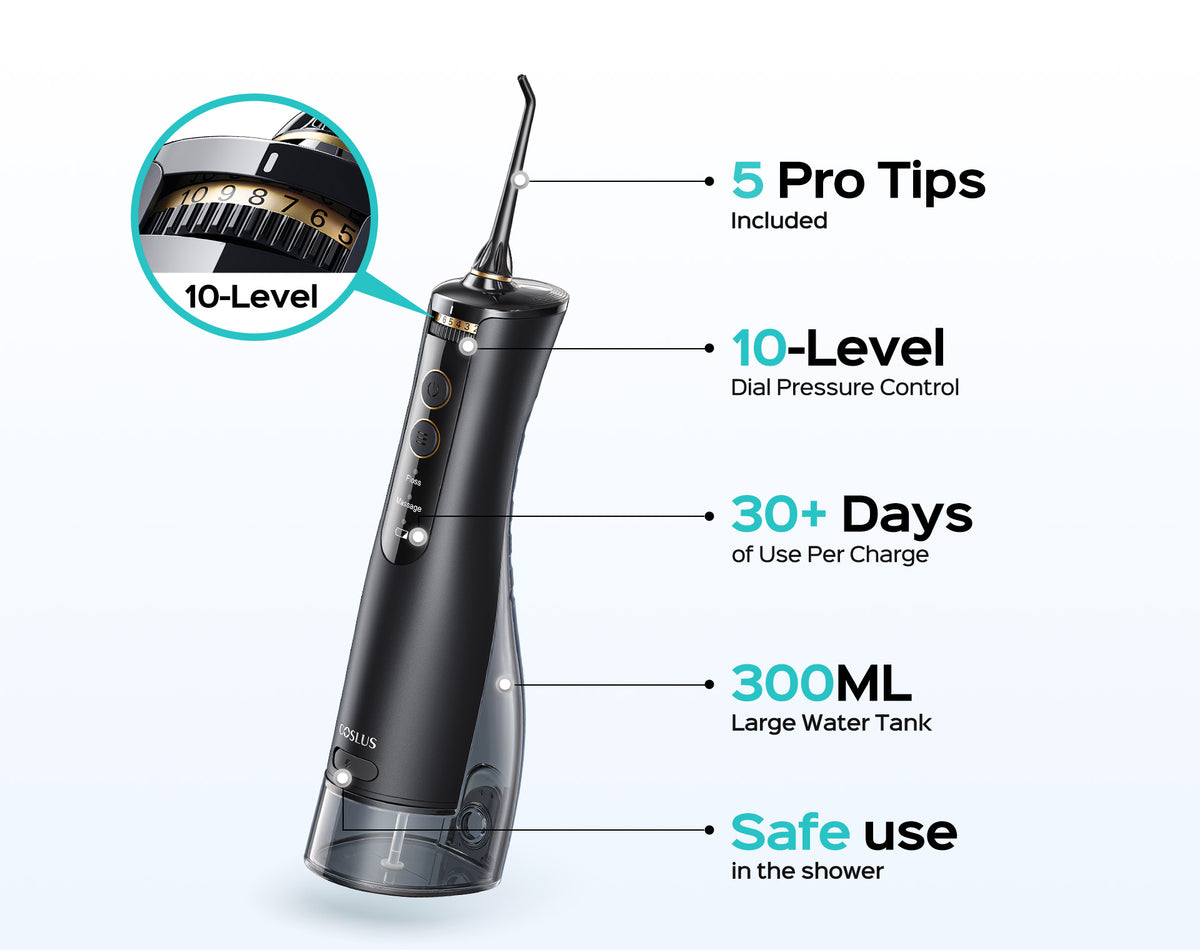
The COSLUS E40 Water Flosser comes with several different tips, and each one is meant for a slightly different job. You do not need to use every tip every day. For most people, the Standard Jet Tip will handle normal daily cleaning, while the other tips are useful for braces, targeted periodontal care, or tongue cleaning. The COSLUS E40 includes five tips in total: two Standard Jet Tips, one Orthodontic Tip, one Periodontal Tip, and one Tongue Scraper. Standard Jet Tip The Standard Jet Tip is the one most people will use for everyday water flossing. It directs a focused stream of water between teeth and along the gumline, helping flush away food debris from areas a toothbrush may miss. Move slowly along the gumline and pause briefly between neighboring teeth before moving on. For normal daily cleaning, this is the simplest place to start. If you are new to the E40, our step-by-step E40 guide covers the full routine. Orthodontic Tip The Orthodontic Tip is designed for people with braces. What makes it useful is the small tapered brush at the end. The brush can lightly contact the areas around brackets and wires while water continues to flow through the tip. Move slowly from tooth to tooth and let the brush lightly pass around the orthodontic hardware. There is no need to scrub hard. This combination of light brushing and water flow is useful in the areas where food tends to collect around braces. If you want the full technique, see How to Floss With Braces Using a COSLUS E40 Water Flosser. Periodontal Tip The Periodontal Tip is intended for more focused cleaning around periodontal areas and the gumline. This is not simply a stronger version of the Standard Jet Tip. Use it at a low, comfortable pressure, especially when working close to sensitive gum tissue. If your dentist or periodontist has told you to clean into a periodontal pocket or below the gumline, follow their instructions for how and where to use the tip. Do not push a specialized tip under the gumline on your own just because it is designed for periodontal care. If you mainly want gentler everyday cleaning rather than periodontal treatment, our guide on choosing a water flosser for sensitive gums may be more useful. Tongue Scraper The Tongue Scraper is for cleaning the surface of the tongue. Use a gentle pressure setting, place the cleaner toward the back of the tongue, and move it forward while allowing the water to rinse the surface. You do not need a strong stream here. The goal is simply to help remove tongue coating and debris as part of your normal oral-care routine. Which COSLUS Tip Should You Use? Tip Best For Standard Jet Tip Everyday cleaning between teeth and along the gumline Orthodontic Tip Braces, brackets, and wires Periodontal Tip Targeted periodontal and gumline cleaning Tongue Scraper Cleaning the tongue surface You do not need to switch tips constantly. For many people, the Standard Jet Tip will handle most daily cleaning. The specialty tips are there when your routine calls for something more specific. How Often Should You Replace COSLUS Water Flosser Tips? COSLUS recommends replacing water flosser nozzles periodically, generally around every six months, depending on use and condition. Replace a tip sooner if it becomes damaged, worn, bent, or difficult to keep clean. Do not automatically follow another brand's replacement schedule. Different manufacturers may give different recommendations for their own tip designs. Using the Tips With the COSLUS E40 The E40 lets you choose the tip and adjust the water pressure separately with its 10-level pressure dial. That means changing the tip and changing the pressure are two separate decisions. Choose the tip that matches what you want to clean, then adjust the pressure until it feels comfortable. You do not need maximum pressure for any of the tips. If you use a water flosser around implants or other dental restorations, technique can be different depending on the restoration. Our dental implant cleaning guide covers that separately. Bottom Line The COSLUS E40 tip set is pretty straightforward: Standard Jet for everyday cleaning, Orthodontic for braces, Periodontal for targeted gum care, and Tongue Scraper for the tongue. You probably will not use every tip equally often. Start with the one that matches what you actually need to clean, and keep the specialty tips for the situations they were designed for.

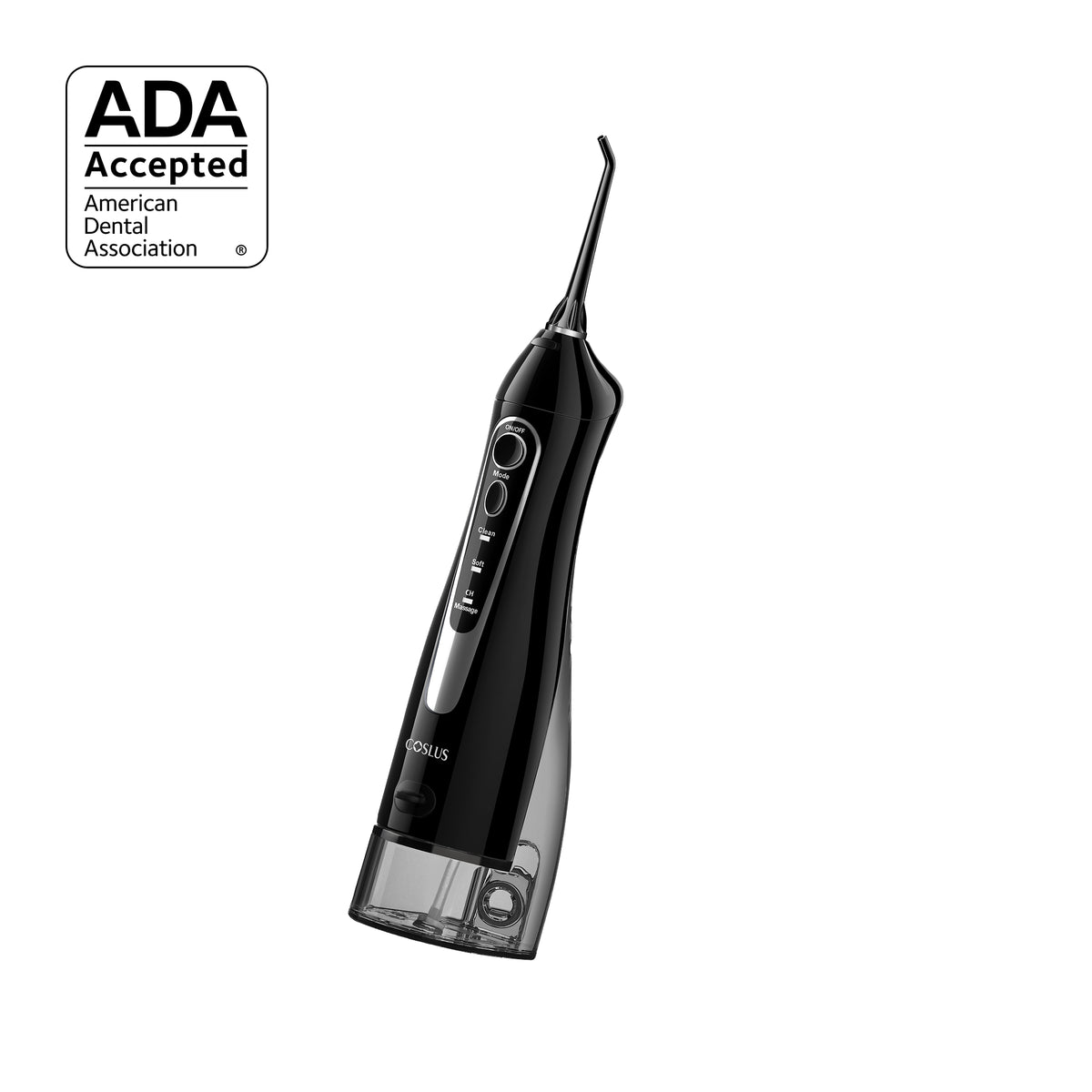
If you're building a proper oral-care routine, you've probably asked yourself: do a water flosser and an electric toothbrush do the same job? And is buying both just overkill? Short answer: they clean different places. An electric toothbrush scrubs the surfaces of your teeth. A water flosser cleans between your teeth and along the gumline. They complement each other — neither one replaces the other. Here's the full breakdown so you can decide what your routine actually needs. What an Electric Toothbrush Does An electric toothbrush — whether oscillating-rotating or sonic — does one job very well: cleaning the surfaces of your teeth. The rapid bristle motion removes plaque biofilm from the front, back, and chewing surfaces more thoroughly, and with less effort, than most people manage with a manual brush. What it can't do well is reach the tight spaces between your teeth. Bristles are simply too large to fit into interdental contacts, and they can't reach below the gumline where plaque also collects. That's not a flaw — it's just not what the tool was designed for. What a Water Flosser Does A water flosser fires a pulsating stream of water between your teeth and along the gumline, flushing out food debris and bacteria that bristles can't reach. It's especially useful around braces, bridges, implants, and other dental work where conventional floss is awkward to maneuver. ADA-accepted water flossers have been shown to help remove plaque and help prevent or reduce gingivitis when used as directed. What a water flosser can't do is scrub tooth surfaces — it doesn't replace brushing, and the ADA Seal doesn't change that. Side-by-Side Comparison Electric Toothbrush Water Flosser Primary job Cleans tooth surfaces Cleans between teeth & along the gumline Reaches between teeth No — bristles can't fit Yes — that's its main purpose Reaches below the gumline Minimal Yes, with a gentle stream Scrubs tooth surfaces Yes No — water rinses, doesn't scrub Braces / implants / bridges Helpful, but awkward around hardware Excellent — no threading required Typical time per use 2 minutes, twice a day About 1 minute, once a day Replaces the other? No No Do You Really Need Both? The standard dental advice hasn't changed: brush twice a day and clean between your teeth once a day. The "clean between your teeth" step is where most routines fall apart — surveys consistently show that a large share of adults skip interdental cleaning entirely, usually because string floss is fiddly and easy to put off. That's the gap a water flosser fills. If you already string-floss thoroughly every single day, a water flosser is optional. But if you're like most people — flossing inconsistently, or avoiding it because your gums bleed or you wear braces — a water flosser turns the step you're skipping into a 60-second habit you'll actually keep. A water flosser is especially worth considering if you: Wear braces, aligners, or a retainer Have implants, bridges, or crowns Have sensitive or bleeding gums Find string floss difficult due to dexterity or arthritis Simply never stuck with string floss Verdict: they solve different problems. The toothbrush handles surfaces; the water flosser handles the spaces between. Together, they cover your whole mouth. How to Use Them Together Many dentists recommend water flossing first, then brushing. The logic: flossing dislodges debris and plaque between teeth, and brushing afterward with fluoride toothpaste lets the fluoride stay on clean tooth surfaces rather than getting rinsed away. A simple daily routine: Water floss (~1 minute): fill the tank, start on a low pressure setting, and trace the gumline, pausing briefly between teeth. Brush (2 minutes): brush with fluoride toothpaste, twice a day — morning and before bed. Water floss once daily is enough for most people; brushing stays twice daily. Choosing a Water Flosser to Pair With Your Toothbrush If you decide to add a water flosser, look for three things: adjustable pressure (so you can start gentle), a tank large enough for a full clean without refilling, and tips that fit your situation (braces, gumline care, tongue cleaning). The COSLUS E40 was designed around exactly that: it's ADA Accepted (shown to help remove plaque and help prevent or reduce gingivitis when used as directed), with a 10-level pressure dial instead of a few presets, a 300mL tank for a full one-fill clean, and 5 tips in the box — two standard jet tips, an orthodontic tip, a periodontal tip, and a tongue-cleaning tip. It's cordless, IPX7 waterproof, and runs up to 30 days per charge, from $39.99 with free shipping, a 30-day money-back guarantee, and a 2-year warranty. Frequently Asked Questions Can a water flosser replace my electric toothbrush? No. A water flosser rinses between teeth and along the gumline, but it doesn't scrub tooth surfaces. You still need a toothbrush — electric or manual — for that. Can I use a water flosser if I already use an electric toothbrush? Yes — that's the ideal combination. The toothbrush cleans surfaces; the water flosser cleans the spaces the brush can't reach. If I can only buy one, which should it be? The toothbrush comes first, since most plaque sits on tooth surfaces. Add the water flosser next to cover interdental cleaning — especially if you don't floss regularly today. Is it okay to use both every day? Yes. Brush twice daily and water floss once daily is the routine dentists recommend for most people. If you have gum disease or specific dental work, follow your dentist's instructions. The Bottom Line A water flosser vs an electric toothbrush isn't an either-or choice — they're two halves of a complete routine. The brush scrubs what you can see; the flosser cleans what you can't. If the "clean between your teeth" step is the one you keep skipping, a water flosser like the COSLUS E40 is the easiest way to finally make it stick.

For most people, using a water flosser once a day for about one minute is a practical routine. You may need a little longer if you wear braces, have dental restorations, or need to clean carefully around particular areas. Using a water flosser more frequently or for a longer time does not automatically produce better results. What matters most is cleaning consistently, following the gumline, pausing briefly between teeth, and using a pressure level that feels comfortable. How Many Times a Day Should You Use a Water Flosser? Most people only need to use a water flosser once per day. The American Dental Association recommends cleaning between your teeth once a day with dental floss or another interdental cleaner. Water flossers are included among these interdental-cleaning options. Clinical studies have also evaluated water flossers as a once-daily addition to regular toothbrushing. In one four-week randomized clinical trial, participants used a water flosser once daily and brushed twice daily. Compared with toothbrushing alone, adding a water flosser produced greater improvements in several measures of gingival bleeding and inflammation. A more recent randomized study also examined daily water-flosser use. After four weeks, the water-flosser group showed greater reductions in gingival inflammation and bleeding than the dental-floss group, while both methods produced similar reductions in plaque. These studies support daily use. However, they do not prove that using a water flosser twice a day is better than using it once a day. How Long Should You Use a Water Flosser Each Time? A full-mouth water-flossing session generally takes about one minute. Some water flossers use a one-minute timer with a 30-second reminder to help users divide the cleaning time between the upper and lower teeth. The exact time depends on your mouth and how you use the device. Someone cleaning between natural teeth may finish more quickly than someone working around braces, bridges, implants, or other dental work. A simple full-mouth routine is: Begin at the back of the mouth. Guide the water stream slowly along the gumline. Pause briefly between neighboring teeth. Clean both the outside and inside surfaces. Repeat the process on the upper and lower teeth. There is no need to hold the stream on one area for an extended period. Slow and systematic movement is more useful than repeatedly cleaning the same spot. Does a Cordless Water Flosser Require a Different Routine? Cordless and countertop water flossers follow the same general once-daily routine. “Cordless” describes the device design, not a different cleaning method. The main practical difference is reservoir capacity. A reservoir that is too small may require a refill before you finish cleaning your entire mouth. The COSLUS E40 Cordless Water Flosser has a 300mL reservoir designed to support a more continuous cleaning routine with fewer interruptions. Its cordless design also means it can be used without being connected to a countertop base during cleaning. Should You Use a Water Flosser More Than Once a Day? Some people choose to use their water flosser more than once a day, particularly after meals. This can be useful for removing food trapped around braces, bridges, or other difficult-to-clean areas. Additional use may make sense if: Food frequently becomes trapped around braces or dental work. Your dental professional has recommended a specific routine. You prefer to clean between your teeth after certain meals. You are receiving periodontal care and have been given individual instructions. There is currently limited evidence showing that twice-daily water flossing provides substantially better results than consistent once-daily use for the average person. Using the device more often should not mean using uncomfortable pressure. If the stream causes pain or persistent irritation, lower the pressure and speak with a dental professional if the problem continues. When Is the Best Time to Use a Water Flosser? There is no single time that works best for everyone. Some people use a water flosser in the evening so that food debris and plaque are removed before sleep. Others include it in their morning routine or use it after the meal when food is most likely to become trapped. The best time is the time you can maintain consistently. You can use a water flosser before or after brushing, provided that you clean thoroughly and continue brushing twice a day. How Often Should You Water Floss With Braces? People with braces should still aim for at least one complete interdental-cleaning session each day. Brackets and wires create additional areas where food can collect, so some users also water floss after meals. These additional sessions may be shorter and focused on removing visible food debris, while the main daily session should cover the entire mouth. Use an orthodontic tip when appropriate and move slowly around each bracket, wire, and tooth surface. More pressure is not necessarily more effective, particularly around irritated gum tissue. What If You Have Bleeding Gums or Gum Disease? Daily interdental cleaning can be especially important when the gums are inflamed, but bleeding should not automatically be treated as harmless. A 12-week randomized trial found that daily water flossing alongside toothbrushing helped reduce gingival inflammation. However, a water flosser cannot remove hardened tartar or treat periodontitis by itself. Persistent bleeding, swelling, pain, gum recession, or loose teeth should be evaluated by a dentist. People with diagnosed periodontal disease should follow their dental professional’s instructions regarding cleaning frequency, pressure, tip selection, and care around treated areas. Do not place a tip deeply below the gumline or add prescription mouth rinses to the reservoir unless instructed by a dental professional. A Simple Daily Routine With the COSLUS E40 Fill the 300mL reservoir with clean, lukewarm water. Insert the tip that matches your cleaning needs. Place the tip in your mouth before turning the device on. Begin at a gentle, comfortable pressure. Guide the stream along the gumline and pause briefly between teeth. Continue until you have cleaned the upper and lower teeth. Turn the device off before removing the tip. Empty any remaining water and allow the wet components to dry. The E40 provides 10 levels of pressure adjustment, allowing smaller changes between settings. The goal is not to reach the highest level. It is to find a setting that allows you to clean comfortably and consistently. Is Longer Water Flossing Better? Not necessarily. A two-minute session is not automatically twice as effective as a one-minute session. Once you have cleaned the entire gumline and the spaces between your teeth, repeatedly directing the stream at the same areas may add little value and could feel uncomfortable. Technique and consistency matter more than extending the session: Follow the same route each time. Do not skip the back teeth or inside surfaces. Pause briefly between teeth. Use controlled, comfortable pressure. Clean once every day rather than completing occasional, overly long sessions. The Bottom Line Most people should use a water flosser once a day for approximately one minute as part of a routine that also includes twice-daily toothbrushing. Your session may take longer if you wear braces or need to clean around dental work. Additional use after meals can help remove trapped food, but current research does not establish that twice-daily water flossing is necessary for everyone. The most effective routine is one that cleans the whole mouth, feels comfortable, and is easy enough to follow every day.

If you wear Invisalign, water flossing fits most naturally into the time between finishing a meal and putting your aligners back in. You already have the trays out. Before they go back over your teeth, use the water flosser to clear food from between teeth, around the gumline, and around any attachments. Finish eating → water floss → brush → clean the aligners → put them back in. That is the part worth remembering. Water Floss Before You Put Your Aligners Back In After eating, food can remain between teeth even when your mouth looks clean. This matters more with aligners because once the trays go back in, they sit closely over the teeth for hours. Use the water flosser before reinserting them. Start at the back of your mouth, follow the gumline, and pause briefly between teeth. You do not need to turn it into a long session — just work steadily around the mouth until you have cleared the obvious food and debris. Then brush and clean the trays before putting them back in. Pay More Attention Around Attachments Attachments are probably the part of Invisalign treatment where a water flosser becomes especially handy. Those small bonded shapes create extra edges where food can catch. When you reach a tooth with an attachment, slow down slightly and direct the stream around its edges and into the spaces between neighboring teeth. You do not need a special technique or maximum pressure. The goal is simply to clear the areas around the attachment before the aligner goes back over it. New Tray Day May Call for Lower Pressure When you switch to a new set of aligners, your teeth can feel more tender for a while. If your usual water-flosser setting suddenly feels uncomfortable, lower the pressure. That is one situation where finer pressure adjustment is genuinely useful. The COSLUS E40, for example, has 10 pressure levels, so you can turn the pressure down after a tray change and move it back up later if you want. The point is not to use the strongest setting. It is to use one that feels comfortable enough that you keep cleaning properly. Keep the Teeth and Aligners as Two Separate Cleaning Jobs The water flosser is for your mouth. The aligners still need to be rinsed or cleaned separately before you put them back in. So instead of thinking of Invisalign care as one complicated routine, think of it as two quick jobs: Clean your teeth. Clean your aligners. Put them back together. That keeps the process much simpler. What About Lunch Away From Home? This is where the routine gets less perfect. At home, you have your toothbrush, water flosser, sink, and aligner-cleaning supplies nearby. At work, school, or a restaurant, you may not. If you regularly get food stuck around attachments or between teeth, a small cordless water flosser can be useful when you have access to a bathroom. But you do not need to turn every lunch into a full dental-care session. Do what is practical, then do a more complete clean when you have your normal setup again. Bottom Line For Invisalign users, water flossing is not a separate orthodontic ritual. It simply fits into the gap between eating and putting the aligners back in. Use it to clear food between teeth and around attachments, lower the pressure when a new tray makes your teeth tender, then brush, clean the trays, and put them back in. That is enough.